
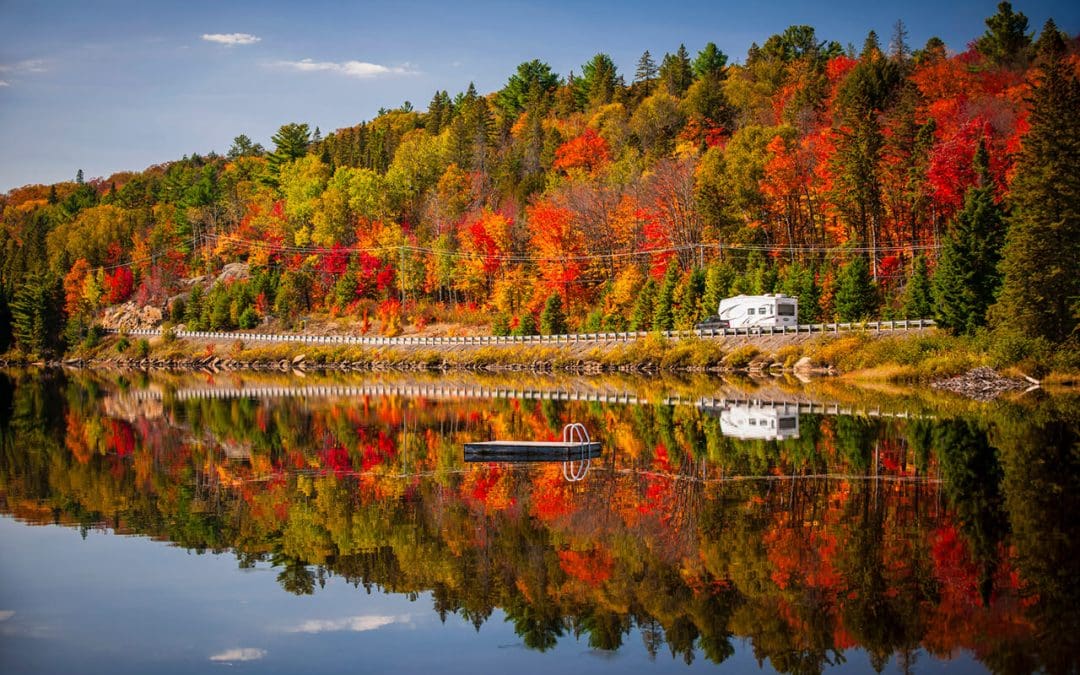
The RVer who takes their first autumn trip and discovers uncrowded campgrounds, comfortable temperatures, and landscape color that summer never offers tends to make it an annual tradition. Planning a fall RV trip is different from planning a summer excursion. Weather variability, campground availability, rig preparation, and routing all carry more weight in autumn. Getting the planning right is what turns a good RV trip into a great one.
Planning Your Fall RV Trip Route and Timing
Peak foliage at a given location lasts one to two weeks; arriving early or late produces a dramatically different experience of the same route. New England remains the benchmark fall destination for foliage. Vermont, New Hampshire, and Maine offer the concentrated color display that makes the region worth the planning effort. Peak timing in northern New England typically runs from late September through mid-October, progressing southward through the month. The Kancamagus Highway in New Hampshire, Acadia National Park in Maine, and the Connecticut River Valley all offer campground infrastructure appropriate for RVs alongside the foliage that draws them.
The Blue Ridge Parkway is the alternative for those who want comparable foliage without New England’s peak-weekend crowds. The parkway runs 469 miles through Virginia and North Carolina, with color peaking from early October through early November depending on elevation, creating an extended window that allows more flexible timing. Several NPS campgrounds along the route accommodate RVs, though size restrictions at some locations favor rigs under 30 feet.
The Upper Midwest offers an experience that’s significantly underrated outside the region. Wisconsin’s northwoods, Michigan’s Upper Peninsula, and Minnesota’s boundary waters country produce dramatic fall color alongside the specific light quality of the Great Lakes in autumn. Competition for sites is substantially lower than in New England, and the combination of water and foliage rewards both photography and simply being present.
The Rig Preparation That Makes a Fall RV Trip Safe and Comfortable
The furnace deserves specific attention before any fall RV trip. A system that sat unused through summer should be tested before departure. Run the furnace for an extended cycle at home, confirm the thermostat is functioning, check the vents for wasp or insect nesting that commonly occurs in unused systems, and verify the propane supply is adequate for the anticipated temperature range. Water system management becomes a planning consideration when overnight temperatures are expected to drop below freezing. A heated water hose rated for the connection to campground hookups, tank heaters on fresh and grey tanks, and knowledge of where to refill if dry camping is part of the plan prevent the frozen pipe scenario that ends a fall trip prematurely.
Packing and Campground Strategy
The gear that transforms a fall RV trip from adequate to genuinely comfortable is layers for temperature swings that can cover 40 degrees in a single day, quality sleeping bags rated for expected overnight lows, and the campfire supplies that autumn camping makes central rather than incidental. Campground reservations for a fall RV trip require earlier attention in popular foliage destinations than most RVers expect. Peak foliage weekends in New England and along the Blue Ridge Parkway fill in advance. Off-peak weekdays and shoulder-season timing offer more flexibility, and the post-Labor Day drop in campground occupancy makes weekday fall travel significantly more relaxed than peak-weekend timing in popular foliage areas.
Frequently Asked Questions (FAQs)
How far in advance should I book campgrounds for a fall RV trip?
For peak foliage weekends in New England, reservations six months or more in advance are the realistic standard. Recreation.gov and Reserve America open reservation windows at different intervals worth monitoring. For weekday travel outside the most popular corridors, two to four weeks of lead time is generally workable.
What temperature range should I prepare for on a fall RV trip?
October in the northeastern and mid-Atlantic regions typically produces daytime highs between 45°F and 65°F and overnight lows between 25°F and 45°F. Planning for a 40-degree swing between daytime high and overnight low covers the realistic range without over-preparing for worst-case conditions.
Is a fall RV trip appropriate for a first-time RVer?
Autumn offers excellent campground availability, but wider temperature swings, furnace dependency, and water system management add complexity a summer trip doesn’t present. First-time travelers benefit from starting with a shorter trip closer to home where backup options are accessible if a system fails.
What are the best apps and resources for planning a fall RV trip?
The Foliage Network and state tourism websites provide real-time foliage tracking to refine timing decisions. Campendium and The Dyrt offer user-generated campground reviews, including size suitability, useful for routes where restrictions vary. GasBuddy helps identify best fuel pricing along the route, which matters more on a fall trip given increased furnace and generator consumption.
What destinations work best for larger rigs over 35 feet?
Private campgrounds along major foliage corridors typically accommodate larger rigs with pull-through sites. KOA, Encore, and Sun RV resort campgrounds in foliage regions are designed for larger rigs. For public land camping, Recreation.gov listings specify maximum vehicle lengths; filtering by length accommodation before booking prevents arriving at a site the rig can’t navigate.
USRV Inspector provides professional RV inspection services to RVers throughout the United States. Contact us to schedule an appointment.